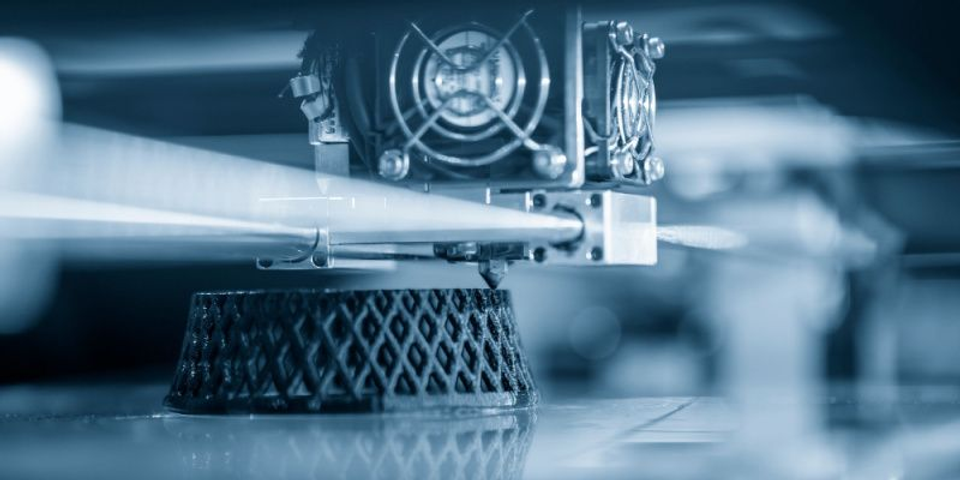

Most people hear “ 3D printing” and picture it as a process where it makes a 3 dimensional object which is printed in a small box. I thought about it the same way before I actually used one for something real. I figured it was basically a fancier way to make a prototype, nothing more. Using it properly for my Design and Technology project talked me out of that pretty quickly. It's not just a shortcut for making models. It's actually changing how engineers work through a design from start to finish.
My workshop tool organiser is where this all started for me. I'd already built the thing in CAD using SketchUp, but I wanted to know how it would sit in actual physical space before I committed to building the full-size version out of proper materials. We've got a Bambu Lab X1 Carbon sitting in the workshop, so I loaded my file into Bambu Studio and printed a small version of the design to see how it'd actually turn out. The second I picked it up, I could see stuff I'd totally missed staring at it on screen for weeks. One whole section came out way bigger than I'd meant it to be.A couple of edges needed adjusting before I could keep going.
I don't know how else to put it except that something about design just clicked differently for me after that. A model can look totally fine on a monitor and still be wrong in a way you'd never spot until you're physically holding it, turning it around, checking whether the parts actually line up the way you assumed they would. Screens hide that stuff somehow.
That's really the core reason 3D printing matters so much in mechanical engineering now. Engineers used to sit around for weeks waiting on a machined prototype. These days someone can sketch a part before lunch and have a printed version in hand by the afternoon, poke holes in it, adjust the file, and have another one ready before they clock out. Because that loop is so fast, people take more risks with their designs, and there's a lot less money and material getting thrown away on dead ends.
There's also a freedom to it that traditional manufacturing just doesn't give you. Cutting tools and machining setups only work within certain physical limits, there's only so many angles a drill bit or a mill can reach. A printer builds up layer by layer instead, so you can end up with internal channels, curved passages, lattice structures buried inside a part, things a lathe would never manage without insane cost.
That freedom matters most anywhere weight is the enemy. Aerospace is the obvious case, saving even a few hundred grams on one part adds up fast across thousands of flights. Motorsport chases roughly the same goal for different reasons. And on the medical side, engineers are printing implants and prosthetics shaped around one specific patient's body, something that was either impossible or ruinously expensive with older tooling.
None of that means printing has replaced the old ways of building things, though. My own project made that obvious fairly fast. The scaled model was genuinely useful for checking proportions and getting a feel for the shape, but it was never going to be the finished organiser. I still had to build the real one out of plywood. Heavy tools sitting in it every day, years of use in an actual workshop, none of that is something a plastic scale model can handle. It's good for one job and one job only.
What that taught me, more than anything, is that good engineers don't marry themselves to one process. They just know what each method is actually for, and they reach for whichever one fits the problem in front of them, sometimes that's a machined metal part, sometimes CNC routing, sometimes a quick print off the bed and nothing fancier than that.
Printing also just makes people less precious about their first attempt at something, and I noticed that in myself while working on this. If a prototype barely costs anything and takes a day or two rather than two weeks , you stop handling your first prototype design as sacred. Something doesn’t work, you drop the specific prototype out of it, you don't just abandon the whole thing. I got a lot more willing to test half-formed ideas early on, mostly because I knew any problems would show up while they were still cheap to fix.
Where all this goes next probably comes down to materials more than anything. High-strength polymers, carbon fibre composites, metal powders, all of that is pushing printed parts closer to being strong enough for actual final products rather than just stand-ins. I'd guess more industries start treating printing as a real production method over the next few years, not just something you use to check your work before the "real" manufacturing starts.
3D printing stopped being just an interesting bit of kit for me somewhere along the way. It turned into more of a way of approaching problems generally. It's not really about getting the design right first time round. It's about being willing to try something, watch a small part of it fail, fix that one thing, and go again until it actually holds together properly. If I'm honest, that habit of mind has ended up mattering more to me than the printer itself ever did.
How 3D Printing Is Changing Mechanical Engineering?

